
A personal reflection on reality capture standards and the communities working to move the profession forward.
Many years ago, while working for an architecture and engineering firm, I was part of a team developing the design for renovations to a large government facility. The building was expansive, and the project included data and access security requirements that added another layer of complexity. Before we could confidently move forward with the design, we needed reliable information about the existing conditions.
Because our firm did not perform laser scanning in-house, we planned to hire a specialized subcontractor to complete the work. My responsibility was to develop the subcontractor’s scope of work. I wrongly assumed there would be resources readily available to quickly do that.
By that time, reality capture had already become a common part of many architecture, engineering, and construction projects. It seemed reasonable that the industry would have an established specification describing how laser scanning should be performed and what the resulting deliverables should include.
I wasn’t looking for hardware specifications, scanner recommendations, or software comparisons. I needed a practical three-part specification or similar resource that an owner, architect, engineer, or contractor could reference in the project requirements. The specification needed to communicate what work was expected, how it should be performed, what level of quality was required, and what the service provider needed to deliver.
So I started searching…
I called people I trusted, searched industry resources and publications, and looked for national standards, best practices, sample scopes, and specifications that I could reference or adapt. I assumed someone had already created what I needed.
No one could point me to a broadly adopted laser scanning specification.
In the end, I gathered as much information as I could, relied on research, my own experience, and the experience of trusted colleagues, then developed a project-specific scope of work that addressed the needs of that specific project. It wasn’t exactly what I had hoped to find, but it allowed the project to move forward.
I figured I had simply overlooked an existing resource, but my immediate task was done. Over the following years, whenever another opportunity arose related to reality capture, I found myself wondering and searching again. The same question continued to surface.
Where was the specification?
A Broader Conversation
Fast forward to 2025, when I attended the R-CON Digital Twins event in Orlando, Florida, after receiving an invitation from Matthew Byrd, founder and CEO of the Reality Capture Network (RCN).
Matthew and I had known each other for several years before RCN was established. We first met while volunteering on the National CAD Standard, and over the years our professional paths continued to cross as we worked on standards development, technology, and other initiatives intended to advance the AECO industry.
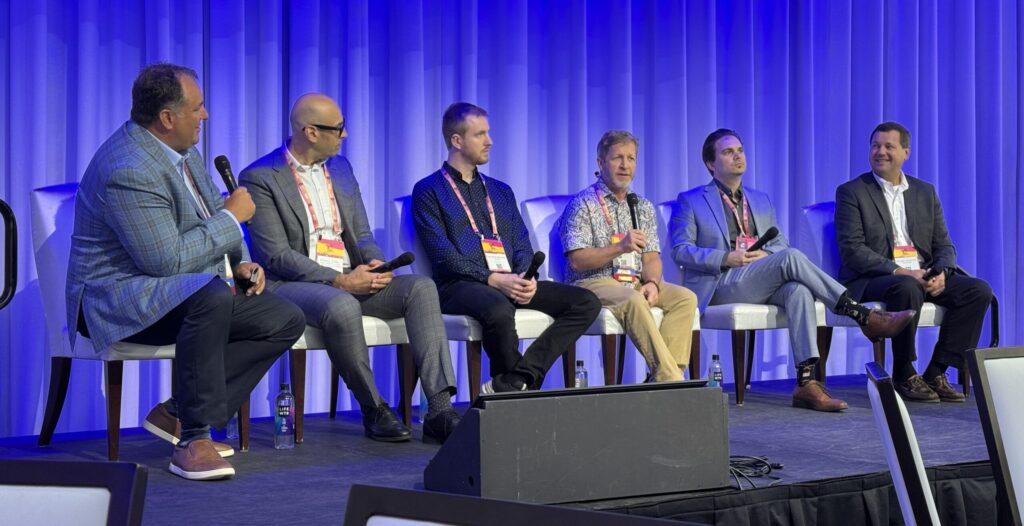
The conference brought together owners, designers, contractors, technology providers, and reality capture professionals from across the industry. The event allowed me to reconnect with people I had known for years, meet many professionals whose work is focused entirely on reality capture, and spend time discussing the challenges and opportunities they experience every day.
Naturally, the question that had stayed with me for years came up again.
Was there now a general laser scanning specification that an owner could incorporate into project requirements?
The conversations were thoughtful, but no one could point me to a single, broadly adopted specification. Instead, I heard about internal company standards, project-specific scopes of work, guidance assembled from multiple sources, and years of practical experience that organizations had developed for themselves.
That wasn’t a criticism of the industry. The conversations simply reflected how reality capture has evolved. Organizations have invested significant time developing their own methods because they needed practical solutions long before a common specification existed. The expertise was there, but it simply wasn’t consolidated into a single resource that owners and project teams could readily use.
The conversations changed the way I thought about this missing specification and revealed something much more important. There was an active community of professionals who recognized the same challenges, were openly sharing what they had learned, and were already working toward practical solutions.
The specification I had been looking for still did not exist. However, I left Orlando with a clearer understanding that the industry was not waiting passively for a solution. People were already working together to address the gap.
Finding a Community
Following the event, I remained engaged with RCN by attending committee meetings, participating in discussions, and continuing conversations with many others working throughout the reality capture community. As I became more involved, I gained a greater appreciation for the many people in this community and their contributions.
One thing is clear. There is no shortage of professionals willing to share their knowledge, compare experiences, and help others solve problems. Rather than competing over ideas, many were investing their own time to develop educational resources, identify best practices, and strengthen the profession as a whole. That spirit of collaboration is one of the things that impressed me most about the community.
Matthew describes the purpose of RCN this way:
“At its core, RCN is about bringing reality capture professionals together to share insights, surface common pain points, and learn from one another. Out of that community, our RCN committees are working to address the gaps the industry keeps running into, whether that’s guidelines, educational content, or standards.”
That statement reflects exactly what I’ve experienced. The conversations go beyond scanners, software, or the latest technology and include a higher purpose, such as helping owners make better decisions, helping practitioners learn from one another, and building practical resources that could benefit the entire industry.
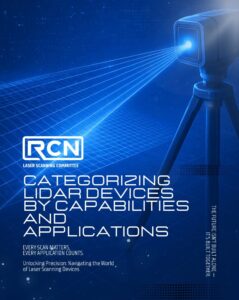
One example is RCN’s recent publication, Categorizing LiDAR Devices by Capabilities and Applications. The publication helps readers understand how different categories of LiDAR technology relate to different applications. It provides practical guidance that can help owners, designers, contractors, and service providers begin asking better questions before a project starts.
Those conversations also reinforced something else I’ve heard repeatedly from reality capture professionals over the years. They often find themselves explaining the value of their work before they can explain the technology itself.
That’s understandable. Many project teams don’t spend every day thinking about LiDAR sensors, photogrammetry, mobile mapping systems, or scanner accuracy. Their focus is delivering a successful project. Helping them understand what information is needed, why it matters, and which approach is appropriate is just as important as collecting the data itself.
That’s one reason I believe reality capture specialists should be involved as early as possible in project planning. Too often, reality capture is introduced after the scope, schedule, budget, or technical approach has already been established. By then, key assumptions may already have been made about what information is needed and how it will be collected.
Bringing experienced professionals into those early conversations allows the project team to evaluate the intended use of the information, select the most appropriate technology, establish realistic expectations, and develop a scope that better supports the project’s objectives.
Reality capture specialists should be involved as early as possible in project planning.
Reality capture also has value throughout the life of a project. It may begin with documenting existing conditions, but it can continue through construction verification, progress documentation, quality assurance, and capturing conditions before walls or ceilings are closed.
The information collected today can also support commissioning, facility management, future renovations, or digital twin initiatives years later. The greatest value is often realized when reality capture is viewed as an integrated part of the project strategy rather than simply another task to complete.
As my involvement with RCN continued, I have enjoyed the networking, committee meetings, and conferences. I am delighted to see new educational resources taking shape through the work of volunteers who genuinely want to improve the profession.
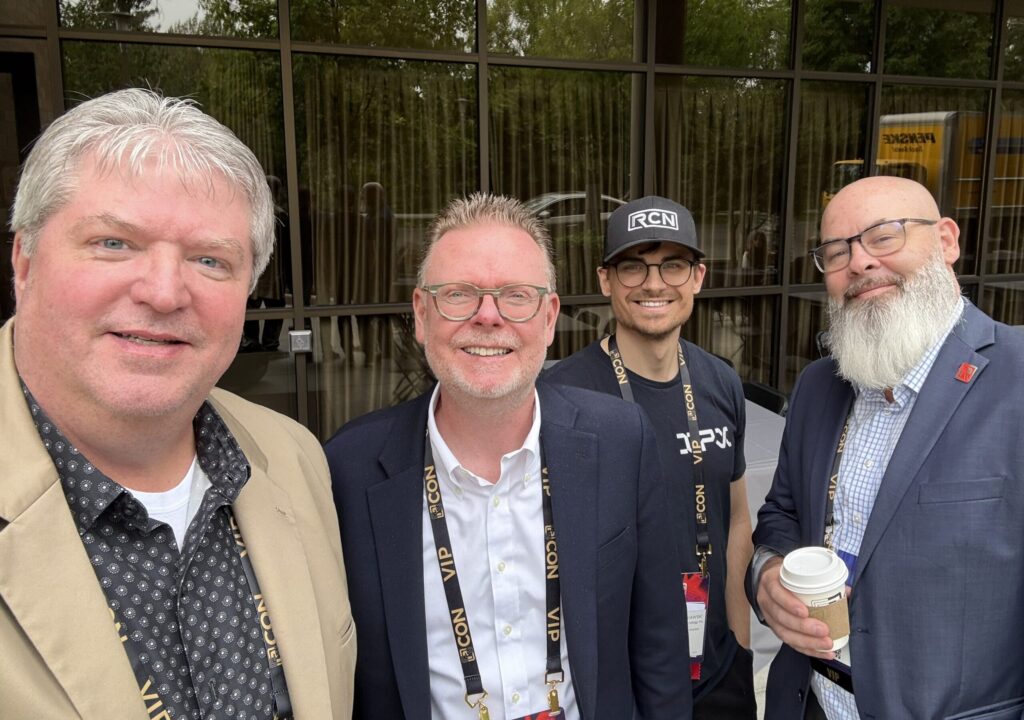
Some of the educational work of the committee will be premiered at R-CON 2026 in Boise, where I will also have the opportunity to present and participate alongside many of the professionals contributing to the future of reality capture.
In addition to the work of RCN, other efforts are also advancing the development of formal standards and guidance for the industry.
Why Reality Capture Standards Matter
One organization playing an important role in this work is the U.S. Institute of Building Documentation (USIBD). John Russo helped lead the formation of USIBD and served as president of its founding board. The organization was established to advance building documentation through standards, guidance, education, professional development, and information sharing.
My connection with John goes back to my work involving the National BIM Standard and later through collaborations while I served as executive director of the National BIM Program. I appreciate his leadership in advancing building documentation and industry standards.
I’ve continued to follow USIBD’s work over the years, particularly its Level of Accuracy resources. The Level of Accuracy (LOA) Specification gives project participants a common framework for defining and verifying the accuracy of building documentation. USIBD has since released Version 3.1 of the specification and the LOA Practitioner’s Guide, which helps owners, project leaders, and practitioners understand how to apply LOA requirements in practice.
These resources address an important part of the broader reality capture conversation. They help project teams communicate what accuracy means, reduce ambiguity, and establish clearer expectations for building documentation deliverables.
They also demonstrate the value of creating practical tools that can be used by both technical specialists and the owners or project teams who rely on their work.
More recently, I learned that the USIBD Laser Scanning Committee is developing the type of standardized laser scanning specification that I had been seeking.
John explained the effort this way:
“One of the biggest gaps our industry faces today is the lack of a standardized laser scanning specification that owners and specification writers can simply incorporate into their project requirements. The USIBD’s Laser Scanning Committee is actively developing that resource as part of our broader mission to advance building documentation and reality capture standards. Along with the LOA Specification, the recently released LOA Practitioner’s Guide, and our work to expand the E57 standard to better support photo imagery, we’re building practical tools that help owners procure better data and improve interoperability across the industry. If you’re passionate about advancing these standards, we welcome your participation.”

His comments confirmed both the continuing need and the progress being made. A general laser scanning specification is not publicly available yet, and it is difficult to predict how long development and broad adoption will take. Still, it is encouraging to know that experienced practitioners recognize the gap and are working to address it.
For me, this is a very important development. The same issue I had encountered many years earlier had become a clear industry priority, and the work was moving beyond informal conversations toward a resource that could eventually provide owners and project teams with a more consistent starting point.
Innovation vs. Standardization
Having contributed to national standards efforts myself, I’ve developed a deep appreciation for the work that goes into creating standards and guidance for an industry.
Standards are the result of countless hours of research, discussion, technical writing, review, editing, and consensus building. They depend on experienced professionals who volunteer their time because they believe the industry will benefit from a common approach.
Developing meaningful standards isn’t easy…
Most committee members already have demanding full-time jobs. They contribute because they care about advancing the profession, not because it’s part of their daily responsibilities. They’re often excellent at identifying problems, sharing experiences, and reaching consensus, but producing a polished, publishable resource requires additional effort from the sponsoring organization.
Technical writing, editing, document design, and publication all take time and involve hard costs. Much of that work happens behind the scenes.
Technology rarely waits for consensus.
Reality capture continues to evolve. New LiDAR systems, cameras, mobile mapping platforms, software, artificial intelligence, and workflows are being introduced at a rate that makes it difficult for standards to keep up. By the time a committee reaches consensus and publishes a document, parts of the technology landscape may have already changed.
That doesn’t mean standards are falling behind. It means they’re serving a different purpose.
Technology moves at the speed of innovation;
standards move at the pace of consensus.
Standards are intended to provide a stable foundation that organizations can rely on, even as individual tools and technologies continue to evolve.
That’s one reason I find the current work being done by organizations like RCN and USIBD so encouraging. Rather than trying to document every new device or software feature, they’re developing practical resources that help people make better decisions, communicate more clearly, and establish a common understanding across the industry.
Will a general laser scanning specification answer every question? Of course not.
Every project has unique objectives, constraints, and requirements. Owners will still need project-specific scopes of work, and experienced service providers will still need to help define the appropriate approach for each use case.
What a common specification can do is provide a much stronger starting point. It can help owners ask better questions, help project teams establish clearer expectations, and help service providers deliver more consistent results. Just as importantly, it creates a common language that everyone involved in a project can understand.
To me, that’s where the real value lies.
Moving Forward
When I first started looking for a laser scanning specification many years ago, I was searching for a document. Looking back, I realize I found something much more valuable.
I found a community of professionals asking the same questions, sharing what they have learned, and investing their time to improve the profession. Along the way, I also found organizations committed to developing practical resources that will benefit the industry for years to come.
Today, the need for a broadly adopted laser scanning specification remains. While that work continues, the industry is not standing still. RCN and USIBD continue bringing together practitioners, owners, educators, technology providers, and volunteers to develop guidance, educational resources, and standards that strengthen the profession and help move it forward.
If you’re involved in reality capture, building documentation, design, construction, or facility management, I encourage you to explore the work these organizations are doing. Read the resources they’ve published. Attend an event. Join a committee. Share your experience.
Whether you’re new to reality capture or have spent years working in the field, there is an opportunity to learn, contribute, and help shape the future of the profession.
Technology will continue to evolve. New tools, workflows, and use cases will emerge. The need for collaboration, education, and practical standards will remain.
What began for me as a search for a specification became something much larger.
It became a reminder that some of our industry’s biggest challenges aren’t solved by one individual, one company, one committee, or one document. They’re solved by communities of professionals willing to share their knowledge, work together, and build resources that benefit everyone.
I’m encouraged by the progress that’s already being made, and I’m looking forward to contributing to that journey.
Continue the Conversation
If this article resonated with you, I welcome your thoughts. Connect with me on LinkedIn to continue the discussion about digital transformation, BIM, reality capture, and industry standards.
About the Author

Dr. Johnny Fortune is the Founder and President of AECO Digitech, where he helps organizations improve digital transformation, digital delivery, standards, technology implementation, and performance.
Learn more at AECODigitech.com.